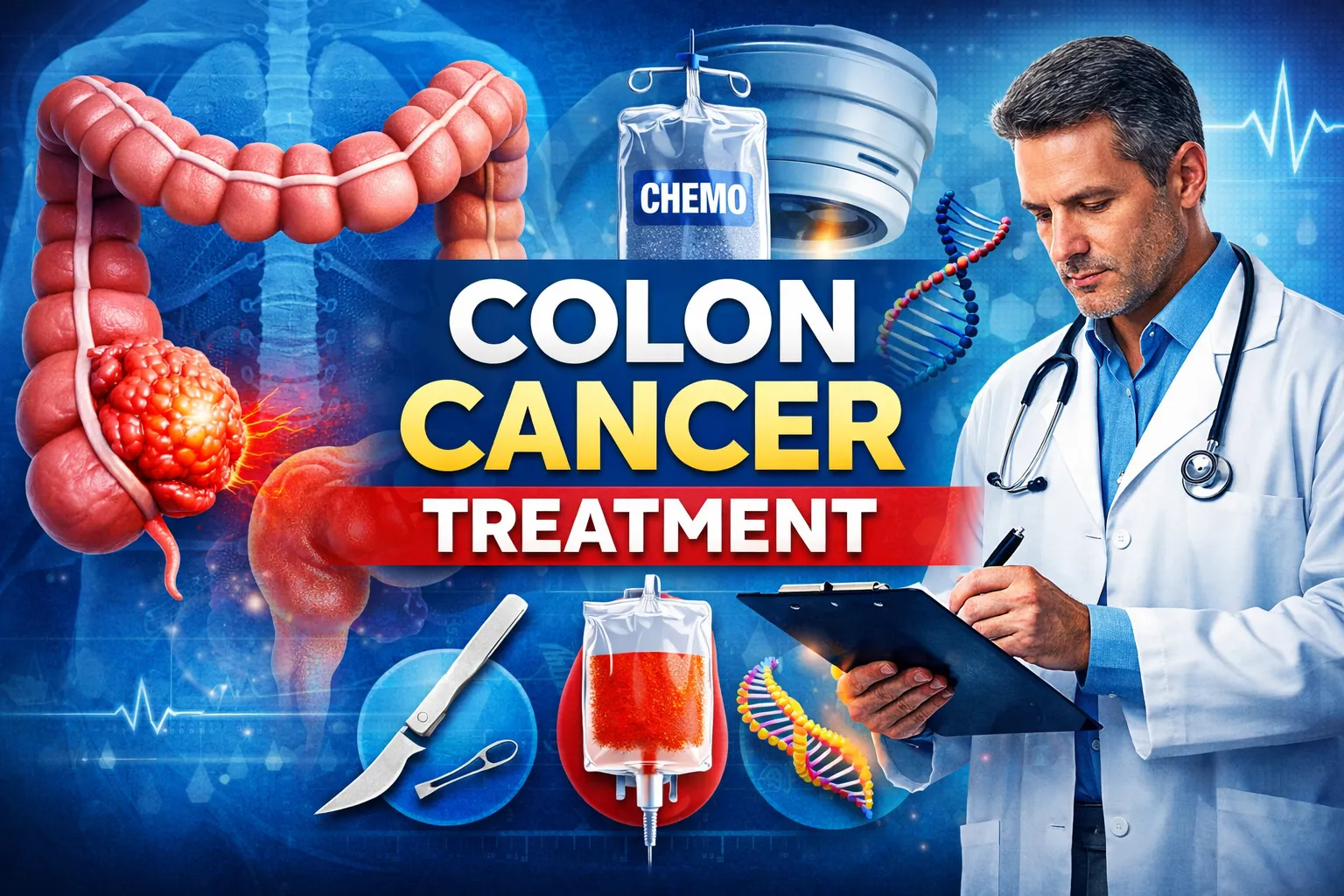
Colon Cancer Treatment: Comprehensive Options, Advances, and What Patients Need to Know
Colon cancer is one of the most common cancers worldwide, affecting millions of people every year. Fortunately, advances in modern medicine have greatly improved colon cancer treatment, especially when the disease is diagnosed early. Today, doctors use a combination of treatments including surgery, chemotherapy, targeted therapy, radiation therapy, and personalized medicine to fight the disease and improve survival rates.
Understanding the available colon cancer treatment options can help patients and their families make better decisions about care. The most appropriate treatment plan depends on several factors such as the stage of cancer, the location of the tumor, the patient’s overall health, and genetic characteristics of the tumor. This article explains the major treatment methods used in colon cancer treatment and how they work together to help patients recover.
1. Understanding Colon Cancer and Why Treatment Matters
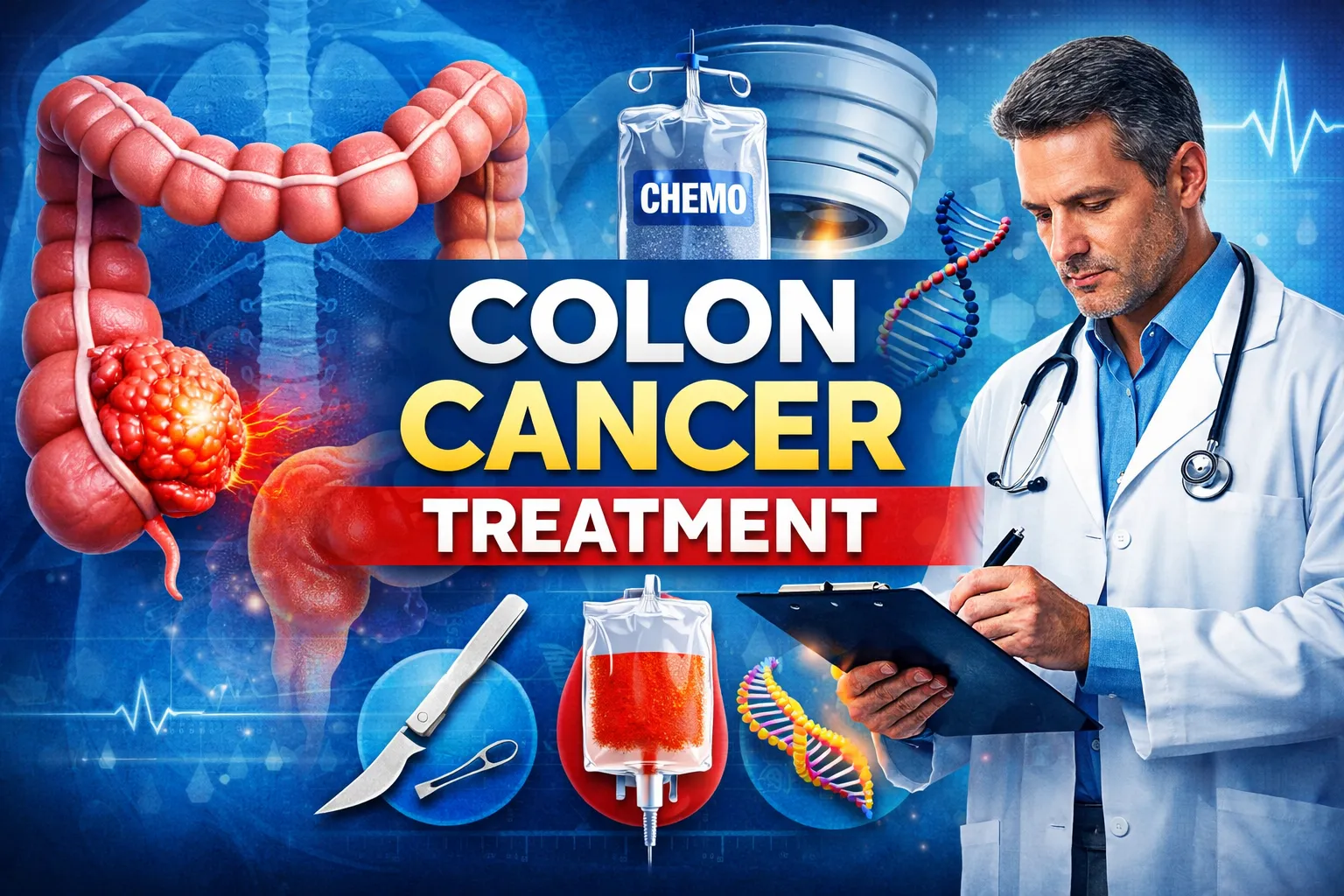
Colon cancer develops in the large intestine, which is the final part of the digestive system. It usually begins as small growths called polyps that form on the inner lining of the colon. Over time, some polyps can become cancerous if they are not removed. Early detection significantly increases the effectiveness of colon cancer treatment.
The colon plays an important role in absorbing water and processing waste in the digestive system. When cancer forms in this organ, it can interfere with normal digestion and eventually spread to nearby tissues or distant organs. Proper and timely colon cancer treatment aims to remove tumors, destroy cancer cells, and prevent the disease from spreading.
Common Symptoms
Patients with colon cancer may experience symptoms such as:
- Persistent abdominal pain
- Changes in bowel habits
- Blood in stool
- Unexplained weight loss
- Fatigue or weakness
Recognizing these symptoms early can help people seek medical care sooner and improve the success of colon cancer treatment.
2. Diagnosis and Staging Before Colon Cancer Treatment
Before starting colon cancer treatment, doctors perform several tests to confirm the diagnosis and determine the stage of the cancer. Staging describes how far the cancer has spread and helps physicians choose the most effective treatment approach.
The results of these tests allow doctors to decide whether surgery alone is enough or whether additional colon cancer treatment such as chemotherapy or radiation therapy is needed.
Diagnostic Tests
Doctors may use several methods to diagnose colon cancer, including:
- Colonoscopy
- Biopsy
- CT scan
- MRI scan
- Blood tests such as the CEA tumor marker
Colon Cancer Stages
Colon cancer is typically classified into the following stages:
- Stage 0: Cancer is limited to the inner lining of the colon
- Stage I: Cancer grows into the colon wall
- Stage II: Cancer spreads through the colon wall
- Stage III: Cancer spreads to nearby lymph nodes
- Stage IV: Cancer spreads to distant organs such as the liver or lungs
Each stage requires a different colon cancer treatment strategy.
3. Surgery as the Primary Colon Cancer Treatment
Surgery is often the first and most important form of colon cancer treatment, especially for early-stage cancer. The goal of surgery is to remove the section of the colon that contains the tumor along with nearby lymph nodes that may contain cancer cells.
In recent years, surgical techniques have improved significantly. Many procedures are now performed using minimally invasive methods, such as laparoscopic surgery, which involves smaller incisions and faster recovery. These advances have made colon cancer treatment safer and more comfortable for patients.
Types of Colon Cancer Surgery
Common surgical procedures include:
- Polypectomy (removal of polyps during colonoscopy)
- Local excision
- Partial colectomy (removal of part of the colon)
- Total colectomy (removal of the entire colon in rare cases)
After removing the tumor, surgeons usually reconnect the remaining sections of the colon. In some cases, a temporary or permanent colostomy may be required as part of colon cancer treatment.
4. Chemotherapy in Colon Cancer Treatment
Chemotherapy uses powerful drugs to kill cancer cells or stop them from growing. It is commonly used after surgery as an additional colon cancer treatment to destroy any remaining cancer cells that may not be visible.
Chemotherapy may also be used before surgery to shrink tumors or in advanced cases to control the growth of cancer when surgery is not possible. This approach helps improve survival and reduce the risk of recurrence.
Common Chemotherapy Drugs
Several drugs are commonly used in colon cancer treatment, including:
- 5-Fluorouracil (5-FU)
- Capecitabine
- Oxaliplatin
- Irinotecan
Although chemotherapy can cause side effects such as fatigue, nausea, or hair loss, medical advances have made these effects easier to manage during colon cancer treatment.
5. Radiation Therapy in Colon Cancer Treatment
Radiation therapy uses high-energy beams to destroy cancer cells. While it is more commonly used for rectal cancer, it can sometimes be included in colon cancer treatment plans depending on the location and stage of the tumor.
Radiation therapy may be used before surgery to shrink a tumor or after surgery to destroy any remaining cancer cells. It is often combined with other colon cancer treatment methods for better results.
Types of Radiation Therapy
Common radiation approaches include:
- External beam radiation therapy
- Stereotactic radiation therapy
Doctors carefully plan radiation therapy to target cancer cells while minimizing damage to healthy tissues during colon cancer treatment.
6. Targeted Therapy for Colon Cancer Treatment
Targeted therapy is a newer approach to colon cancer treatment that focuses on specific molecules involved in cancer growth. Unlike chemotherapy, which affects many rapidly dividing cells, targeted therapy attacks particular pathways that cancer cells use to grow and spread.
This form of treatment is often used for advanced colon cancer or tumors with certain genetic mutations.
Examples of Targeted Therapy Drugs
Some commonly used targeted drugs include:
- Bevacizumab
- Cetuximab
- Panitumumab
Doctors often perform genetic testing on tumors to determine whether targeted colon cancer treatment will be effective.
7. Immunotherapy in Colon Cancer Treatment
Immunotherapy is an innovative type of colon cancer treatment that helps the body’s immune system recognize and attack cancer cells. Instead of directly killing cancer cells, immunotherapy boosts the natural defense system of the body.
This treatment is particularly effective for patients whose tumors have specific genetic characteristics, such as microsatellite instability (MSI-H).
Examples of Immunotherapy Drugs
Common immunotherapy medications include:
- Pembrolizumab
- Nivolumab
These drugs have shown promising results in certain patients receiving colon cancer treatment.
8. Personalized and Precision Medicine
Precision medicine is transforming modern colon cancer treatment by tailoring therapies to the genetic characteristics of each patient’s tumor. This approach helps doctors choose treatments that are more likely to work for a particular individual.
Through genetic testing, doctors can identify mutations that influence how cancer behaves and how it responds to treatment.
Genetic Markers Often Tested
Examples of genetic markers include:
- KRAS mutation
- BRAF mutation
- MSI status
- HER2 amplification
Identifying these markers allows doctors to design more personalized colon cancer treatment strategies.
9. Managing Side Effects During Treatment
Managing side effects is an important part of successful colon cancer treatment. Treatments like chemotherapy and radiation therapy can affect healthy cells, leading to temporary symptoms.
Doctors and healthcare teams work closely with patients to reduce discomfort and maintain quality of life during colon cancer treatment.
Common Side Effects
Patients may experience:
- Fatigue
- Nausea
- Diarrhea
- Nerve damage (neuropathy)
- Loss of appetite
Supportive care, medications, and proper nutrition can help patients cope with these challenges while undergoing colon cancer treatment.
10. Recovery, Follow-Up Care, and Long-Term Outlook
After completing colon cancer treatment, regular follow-up care is essential. Doctors monitor patients for signs of recurrence and help manage long-term health after treatment.
Follow-up visits may include physical exams, blood tests, imaging scans, and periodic colonoscopies.
Healthy Lifestyle After Treatment
Patients are often encouraged to adopt healthy habits such as:
- Eating a balanced diet rich in fiber
- Exercising regularly
- Avoiding smoking
- Limiting alcohol consumption
- Attending regular medical checkups
These lifestyle changes can support recovery and improve long-term health following colon cancer treatment.
Conclusion
Modern colon cancer treatment has improved dramatically over the past few decades. Today, patients have access to a wide range of therapies including surgery, chemotherapy, targeted therapy, radiation therapy, and immunotherapy. These treatments can be combined to create personalized care plans that provide the best chance of recovery.
Early detection remains one of the most important factors in successful colon cancer treatment. With continued research, improved screening methods, and new therapies being developed, the outlook for people diagnosed with colon cancer continues to become more hopeful each year.