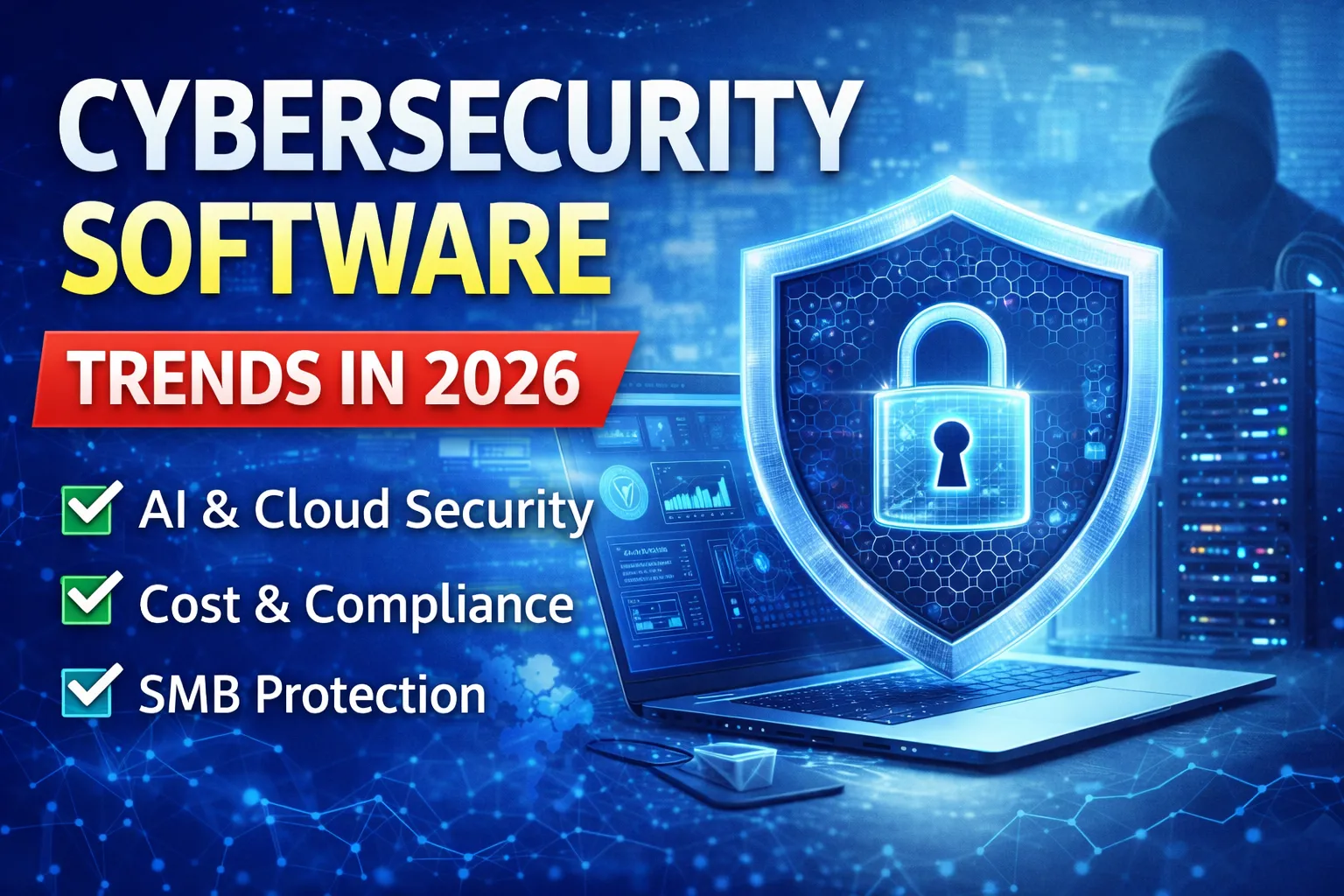
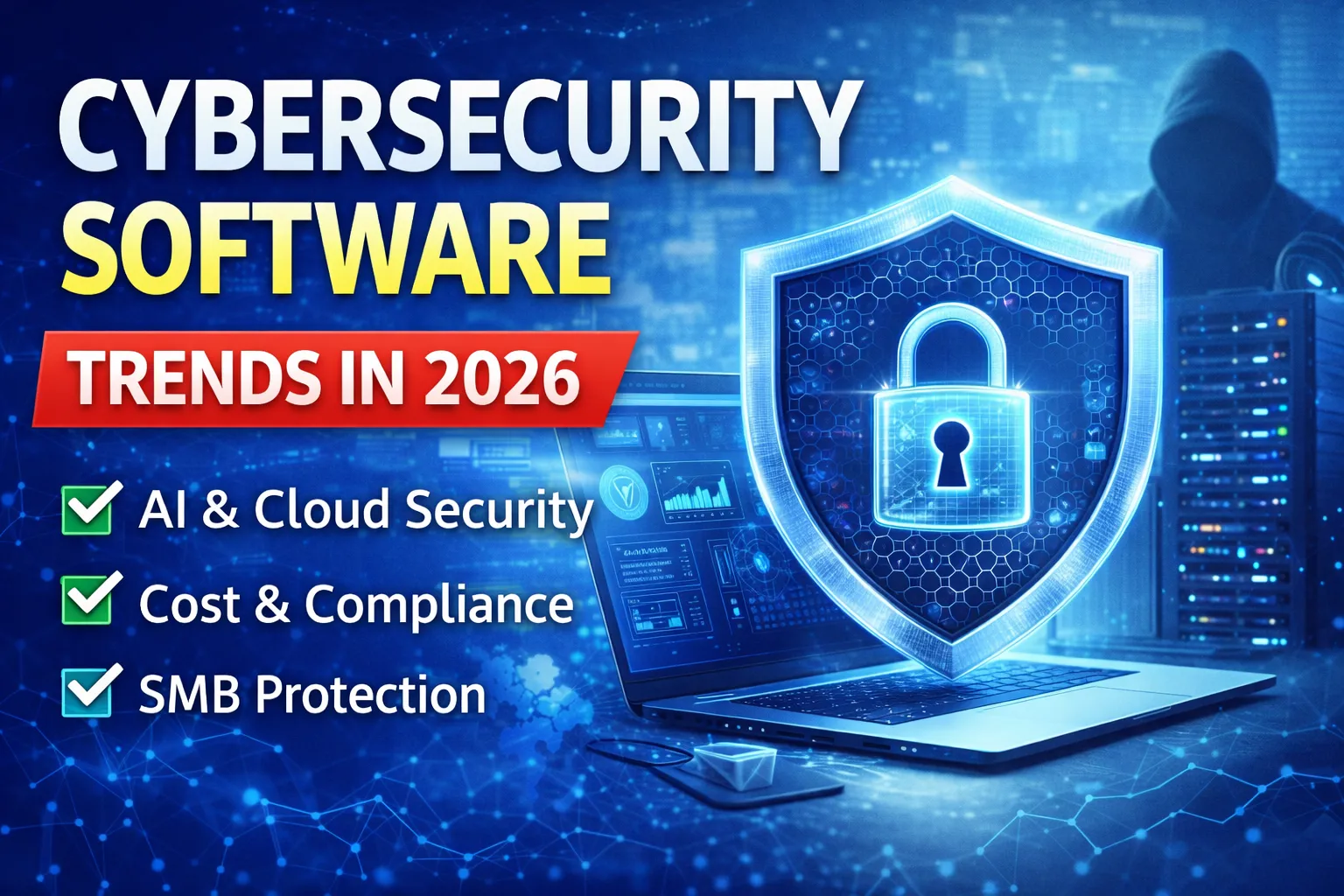
Cybersecurity Software in 2026: New Trends Shaping Business Protection
As cyber threats continue to evolve, cybersecurity software remains a top priority for organizations across the United States. From ransomware incidents to data breaches and phishing attacks, businesses of all sizes are reassessing their digital protection strategies.
In 2026, the cybersecurity software landscape is being shaped by automation, artificial intelligence, and cloud-native security models designed to address modern risk environments.
 Growing Threat Landscape for Small and Mid-Sized Businesses
While large enterprises often dominate headlines, small and mid-sized businesses (SMBs) are increasingly targeted by cybercriminals.
Common risks include:
- Phishing campaigns
- Ransomware attacks
- Business email compromise
- Cloud misconfiguration
- Endpoint vulnerabilities
As a result, demand for accessible and scalable cybersecurity software solutions continues to rise.
AI-Powered Threat Detection Gains Momentum
Artificial intelligence and machine learning are playing a larger role in modern cybersecurity tools.
Key capabilities now include:
- Real-time anomaly detection
- Automated incident response
- Behavioral analytics
- Predictive threat modeling
These technologies help reduce response times and improve overall resilience against evolving attack methods.
Cloud Security and Remote Work Protection
With hybrid and remote work models now standard across many industries, businesses are investing more heavily in:
- Cloud workload protection
- Secure access service edge (SASE) frameworks
- Multi-factor authentication (MFA)
- Zero-trust network architecture
Cybersecurity software vendors are expanding cloud-based offerings to meet these changing infrastructure needs.
Integrated Security Platforms Replace Fragmented Tools
In previous years, many companies relied on multiple standalone security tools. In 2026, organizations are shifting toward unified platforms that combine:
- Endpoint protection
- Email security
- Identity management
- Network monitoring
- Data loss prevention
Integrated systems help streamline management while improving visibility across environments.
Cost Considerations and Budget Planning
Cybersecurity software pricing varies depending on:
- Number of users or endpoints
- Cloud infrastructure scale
- Compliance requirements
- Support level and service tier
For small businesses, subscription-based SaaS models provide predictable monthly costs and scalable deployment options.
Cost optimization has become a major focus, with companies comparing solutions based on value, feature depth, and long-term ROI.
Regulatory and Compliance Pressures
Data privacy regulations and industry standards continue to influence cybersecurity investment decisions.
Businesses must consider:
- Data protection laws
- Industry-specific compliance requirements
- Breach reporting obligations
- Risk assessment documentation
Cybersecurity software providers increasingly integrate compliance reporting features to support audit readiness.
The Outlook for Cybersecurity Software
Looking ahead, the cybersecurity software market is expected to continue expanding as:
- AI capabilities mature
- Cloud adoption increases
- Cyber insurance requirements tighten
- Supply chain security gains attention
Businesses that proactively evaluate and update their security tools are better positioned to manage operational risk in a digital-first economy.
Conclusion
Cybersecurity software in 2026 reflects a shift toward smarter, more integrated, and scalable protection strategies. As threats grow more sophisticated, organizations across the United States are prioritizing solutions that balance automation, compliance, and cost efficiency.
Staying informed about emerging tools and evolving best practices can help businesses make more confident decisions when selecting cybersecurity software solutions.